
A Car Parts Retailer Showed Up in 1% of AI Answers. Six Months Later, 1 in 20 Customers Said AI Sent Them.
In September 2025, an aftermarket car parts retailer ran a simple test. The team wrote out a hundred of the questions its customers actually ask, the commercial ones, the questions that end in a purchase, and put them to ChatGPT, Google's AI Overviews and Perplexity every day.
The brand came up in fewer than one prompt in a hundred.
They checked from the other side too. The post-purchase survey, the one that asks how you found us, showed fewer than half a percent of buyers naming an AI assistant. Two different instruments, one answer: in the fastest growing way people were researching parts, the company did not exist.
Six months later, by mid-March 2026, the brand appeared in more than 20% of those same tracked prompts. Five percent of customers now credited AI search as the way they found the store. Revenue from AI referral traffic was up 344%.
That is the whole arc. Here is what happened in between, and what it is reasonable to take from it.
Nobody was searching for their name
The problem was never expertise. This is a company with real authority in its niche. The problem was that its authority lived in places an AI assistant could not use. Product pages built for a shopper who already knew what they wanted. Category pages that listed inventory but did not answer questions. A brand that turned up in forums and roundups only occasionally, and when it did, not in the language a model reaches for when someone asks what to buy.
An assistant asked for a recommendation assembles an answer from what it can find and verify. If a brand's pages do not say which vehicles a part fits, what problem it solves and how it compares, the model has nothing to hold onto. It recommends the brand whose pages do.
Four things, over six months
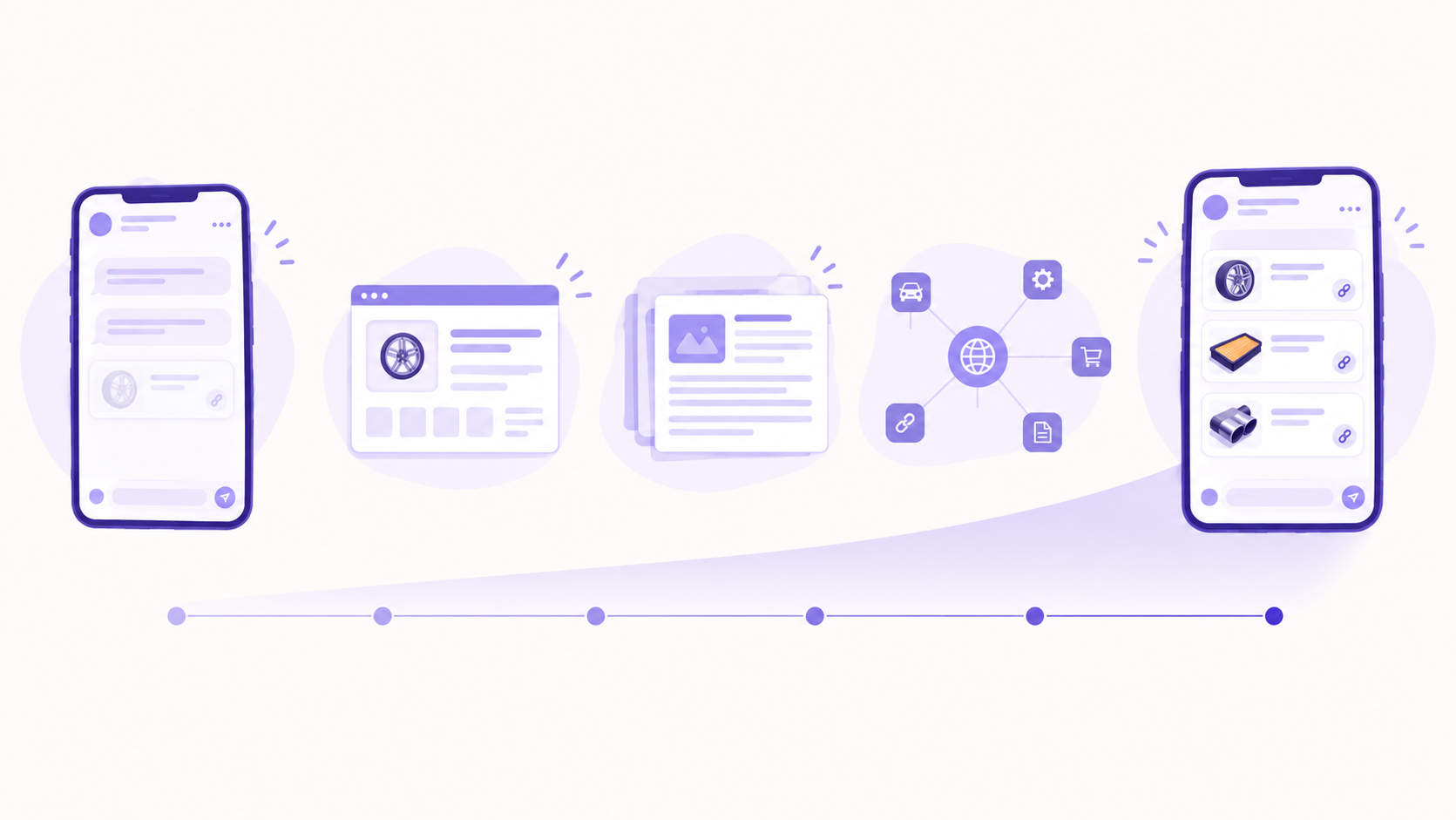
The published case study describes four initiatives running in parallel.
The product pages were rebuilt. Not redesigned. Rebuilt around the information a model needs to recommend a product: specifications, use cases, compatibility data, and the specific questions buyers ask at the product level. The same facts a knowledgeable counter salesperson would volunteer, written down where a crawler can read them.
Twenty comparison articles went up. "Best of" pieces and head-to-head comparisons, published on the company blog and structured for citation. This is the content a model quotes when it says "according to."
A hundred and fifty-four new brand mentions were built. Across four channels: pitches to third-party product roundups, guest posts on automotive sites, a student scholarship promoted to universities, and a press release announcing a sponsorship. AI assistants do not take a brand's word for its own quality. They triangulate across sources. More independent sites saying the brand exists and is credible means more confidence in recommending it.
They showed up where enthusiasts argue. Community forums where car people compare parts carry weight in how assistants form recommendations. The team built an authentic presence there rather than a promotional one.
None of these is exotic. What made them work was that they were all pointed at the same hundred prompts, and someone was checking those prompts every day.
Why this one is worth believing more than most
A lot of AI visibility success stories float a percentage with nothing underneath it. This one has two things most do not.
First, a measured baseline: a hundred commercial prompts, tested daily, three platforms, from the first week. You cannot claim a twenty-point lift unless you know you started at one.
Second, attribution that does not depend on click tracking. AI referrals are notoriously undercounted, because a person who gets a recommendation in a chat window often just types the brand name into a browser. That shows up as direct traffic. Asking customers at checkout how they found you catches what analytics misses. Going from under 0.5% to 5% on that survey is the most persuasive number in the whole story, because the customers said it themselves.
The marketing manager's own summary was that the work put a small brand in the same arena as companies ten to twenty times its size.
What it is not
The figures were reported by the agency that ran the campaign, through a press release. They have not been independently audited. Treat the direction as solid and the exact multiples as the company's own accounting.
And notice the timeline. Six months, not six weeks. The pages had to be rebuilt, the articles written, the mentions earned one at a time. AI visibility responded to that steadily rather than overnight.
If you sell anything with a spec sheet
The lesson transfers almost directly to any business that sells products people research before buying.
Find out where you stand before you touch anything. Write down the questions a buyer asks, run them repeatedly in the assistants your customers use, from the places your customers live, and record who gets named. Then ask your own customers how they found you. If the two numbers agree that you are invisible, you have a baseline and a reason.
Then give the models something to cite: pages that answer questions, comparisons that name competitors honestly, and a footprint on independent sites a model would trust.
The retailer in this story was not a technology company. It sold car parts, and it started at one percent.
References
- Press release via PR Newswire, "Aftermarket Auto Parts Retailer Grows AI Search Revenue 344% in Six Months," 18 May 2026. prnewswire.com
- MarTech Series coverage of the same release, 18 May 2026. martechseries.com