
How a Tiny Consultancy Got Recommended Over Agencies Ten Times Its Size.

Picture the prompt. Someone running a twenty-person sales team types into an AI assistant: who is the best HubSpot consultancy for a company my size?
The honest answer, for a lot of those buyers, is a boutique firm. Small, senior, hands-on. The kind of firm that does not have a marketing department because the three people who work there are busy doing the work.
For one such firm, a three-person HubSpot consultancy, the assistant's answer was almost always somebody else. The firm's own tracking put it at 7% visibility. When buyers asked the questions it was built to answer, it was named roughly one time in fourteen. The recommendations went to large agencies with large budgets, even when the boutique model was the better fit for the question being asked.
Three weeks later it was at 36%. The founder noted that the big competitors were still sitting around 13%.
What was actually wrong
The instinct when you are invisible is to write more. This firm did something less obvious first. It worked out what the models were looking at when they decided whom to recommend, and found that most of the problem was structural rather than a lack of substance.
Three fixes, according to the published case study.
Structured data. The firm's services, expertise and client results were marked up so a machine could parse them without guessing. A model deciding whether you are a HubSpot consultancy that serves mid-sized sales teams wants that stated plainly in a format it recognises, not implied across a portfolio page.
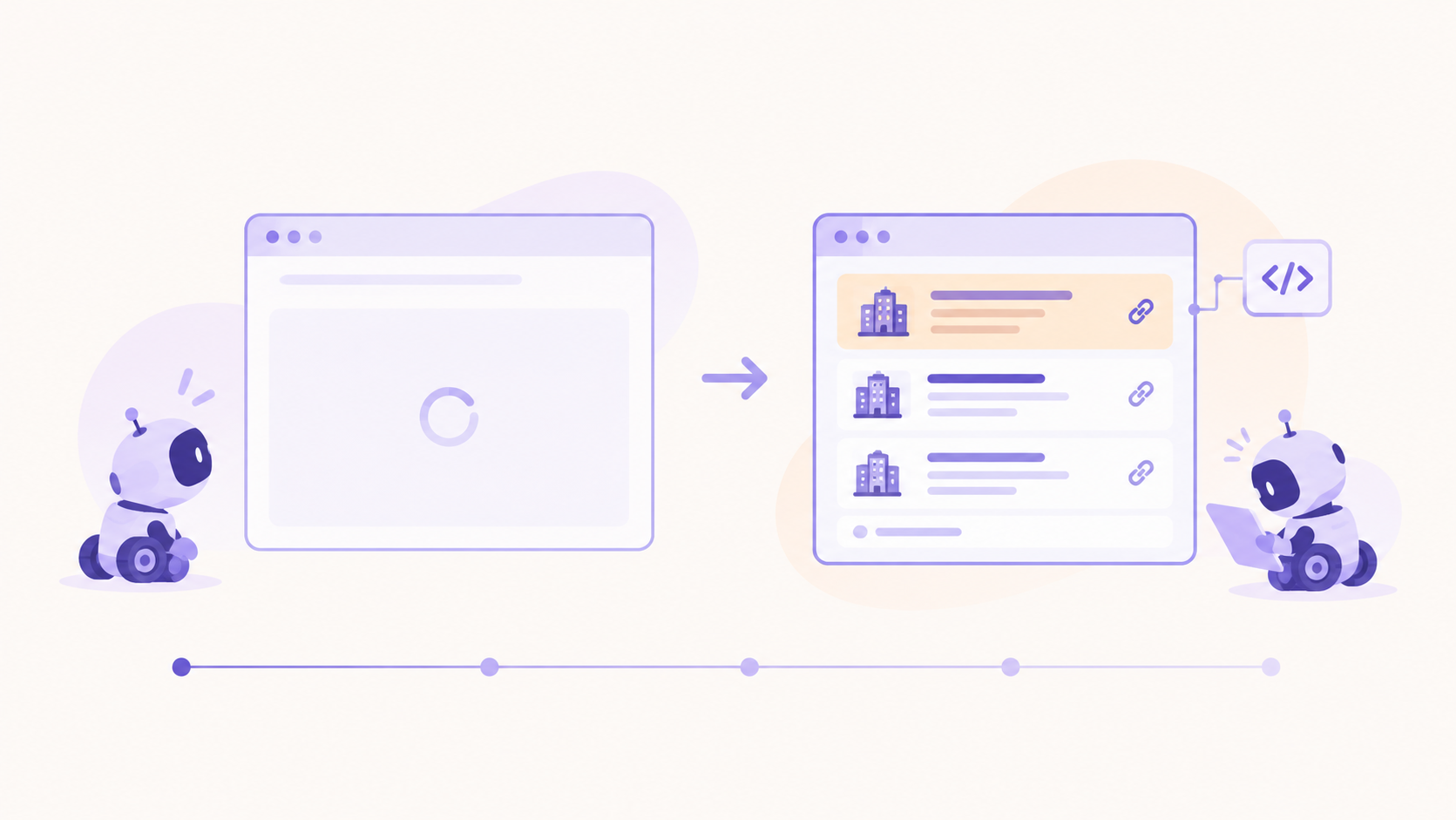
Site architecture. The firm fixed how its content was delivered so AI crawlers could actually read it. This matters more than most businesses realise. An analysis of more than 500 million fetches by OpenAI's crawler found no evidence of it executing JavaScript, and the same has been reported for the crawlers behind Claude and Perplexity. If your content only exists after a script runs in the browser, those systems see an empty page. A site can rank normally on Google and be blank to every AI assistant at the same time.
Direct-answer content. Pages written to answer specific prompts in natural language, "who is the best HubSpot consultancy for a 20-person sales team" being the model, rather than pages built to rank for a keyword. The firm treated the assistants as conversational logic engines and wrote for that.
Why weeks and not months
Most AI visibility work is measured in months, because earning mentions on independent sites and building a body of citable content takes time. This case moved in weeks, and the reason is instructive.
The firm already had the substance. Real expertise, real results, a clear niche. What it lacked was legibility. Once the structural barriers came down, the models could see what was already there. There was nothing to build, only something to uncover.
That is the pattern for a lot of small, specialist businesses. If you are good and narrow, you may be closer to visible than you think. The barrier is often technical.
What the numbers do and do not say
This case reports visibility, not revenue. There is no sales figure attached to it, and it would be wrong to invent one.
But for a consultancy that lives on inbound enquiries, share of recommendations is the pipeline. Going from being named one time in fourteen to roughly one time in three, on the exact prompts your ideal client types, changes how many conversations you get to be part of.
Two cautions. The result comes from a vendor's published case study, not an independent audit. And a three-week window is short. AI answers vary from run to run, so a jump measured over weeks needs to hold over months before it is a trend rather than a good fortnight. Keep checking.
The transferable part
If you are a small firm with real expertise and low AI visibility, run the crawler test before you write a single article. Open your site, view the page source, and search for a sentence of your own copy. If it is not in the raw HTML, no AI assistant has ever read it.
Then say plainly, in structured form, who you are and whom you serve. Then write the answer to the question your best client would ask.
The consultancy in this story did not outspend anyone. It made itself readable.
References
- Am I Cited, "AI Search Visibility Revenue: 6 Case Studies," which documents the consultancy's published results. amicited.com
- Radiant Elephant, on the Vercel and MERJ analysis of more than 500 million GPTBot fetches. radiantelephant.com
- HybridRanking, "Most AI Crawlers Still Don't Render JavaScript in 2026." hybridranking.com